One day while working as a registered nurse, I met a patient who told me his tagging moniker was “MONSTR.” I immediately recognized the name and told him I had seen one of his tags on the old Best Buy building in Winston-Salem. He looked surprised—not just that I remembered it, but that I had actually paid attention.
I explained to him that I’ve always been fascinated by graffiti culture. Not long before that conversation, I had spent time wandering the rail yards photographing freight cars covered in layered names, symbols, and abstract works. I’ve walked through the River Arts District in Asheville admiring the murals, throw-ups, and hidden tags tucked into alleyways and forgotten corners. Names like “Grief,” “JEWL,” “CWC,” “Glock,” “Souris,” and “Web” began appearing to me like recurring characters in a story spread across walls, bridges, boxcars, and abandoned buildings.
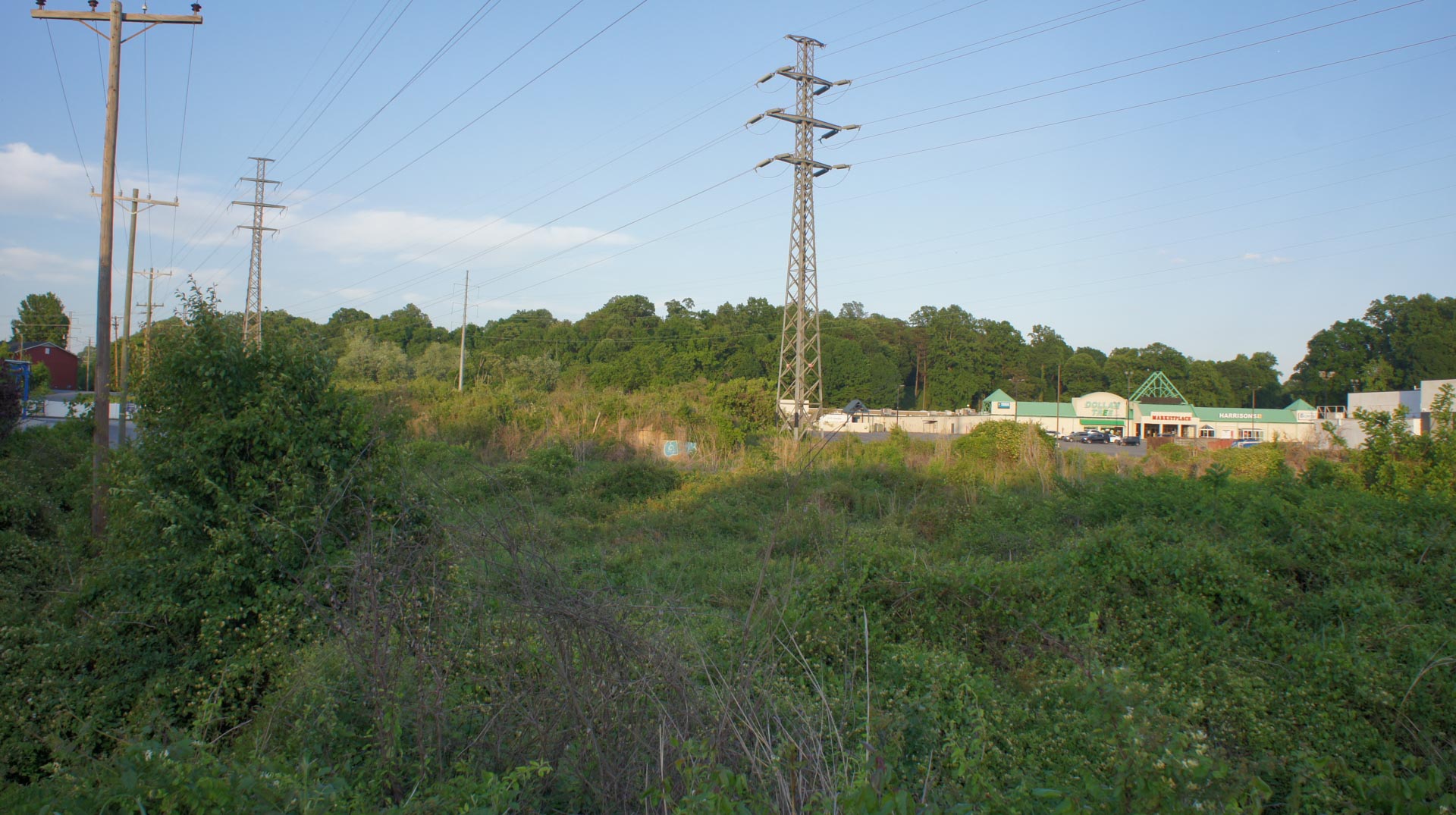
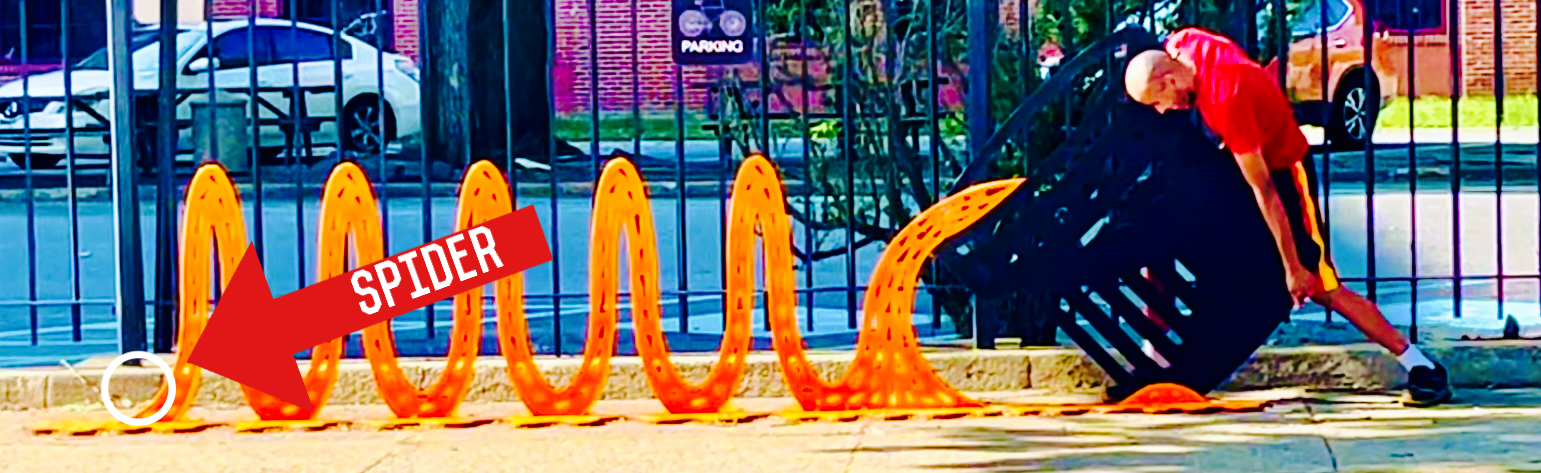
Glock in the Weeds of Winston Salem
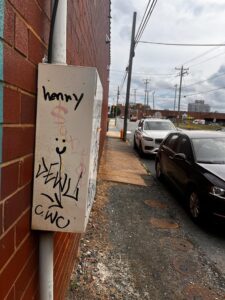
JEWL CWC Tag in Winston Salem
Recently, I invited a friend to join me on what we jokingly called a “Glock Tour” of Winston-Salem. We spent the day driving, walking, and searching for his tags throughout the city. It felt like an Easter egg hunt. Once you begin noticing graffiti, you realize these artists are carrying on conversations in plain sight while most of the world passes by without ever looking up.
There is an interesting psychological phenomenon known as the Baader–Meinhof phenomenon, sometimes referred to as the “frequency illusion.” It happens when something enters your conscious awareness for the first time and suddenly seems to appear everywhere. In reality, it was always there—you simply were not tuned into it.
Graffiti operates exactly this way.
Most people move through cities completely blind to tags, handstyles, stickers, wheatpaste posters, and throw-ups. Walls become background noise. Train cars become invisible objects rushing past on the tracks. But once someone learns a name, recognizes a style, or understands that these markings are connected to actual individuals moving through the city, everything changes. Suddenly the same person who never noticed graffiti before begins seeing it on utility boxes, bridges, abandoned buildings, dumpsters, bathroom stalls, rail cars, and rooftops.
Once awareness kicks in, people generally move in one of two directions.
For some, graffiti becomes a massive eyesore—a visual invasion they can no longer ignore. Every tag begins to feel like decay, disorder, vandalism, or disrespect for shared spaces. What once blended into the environment now feels overwhelming.
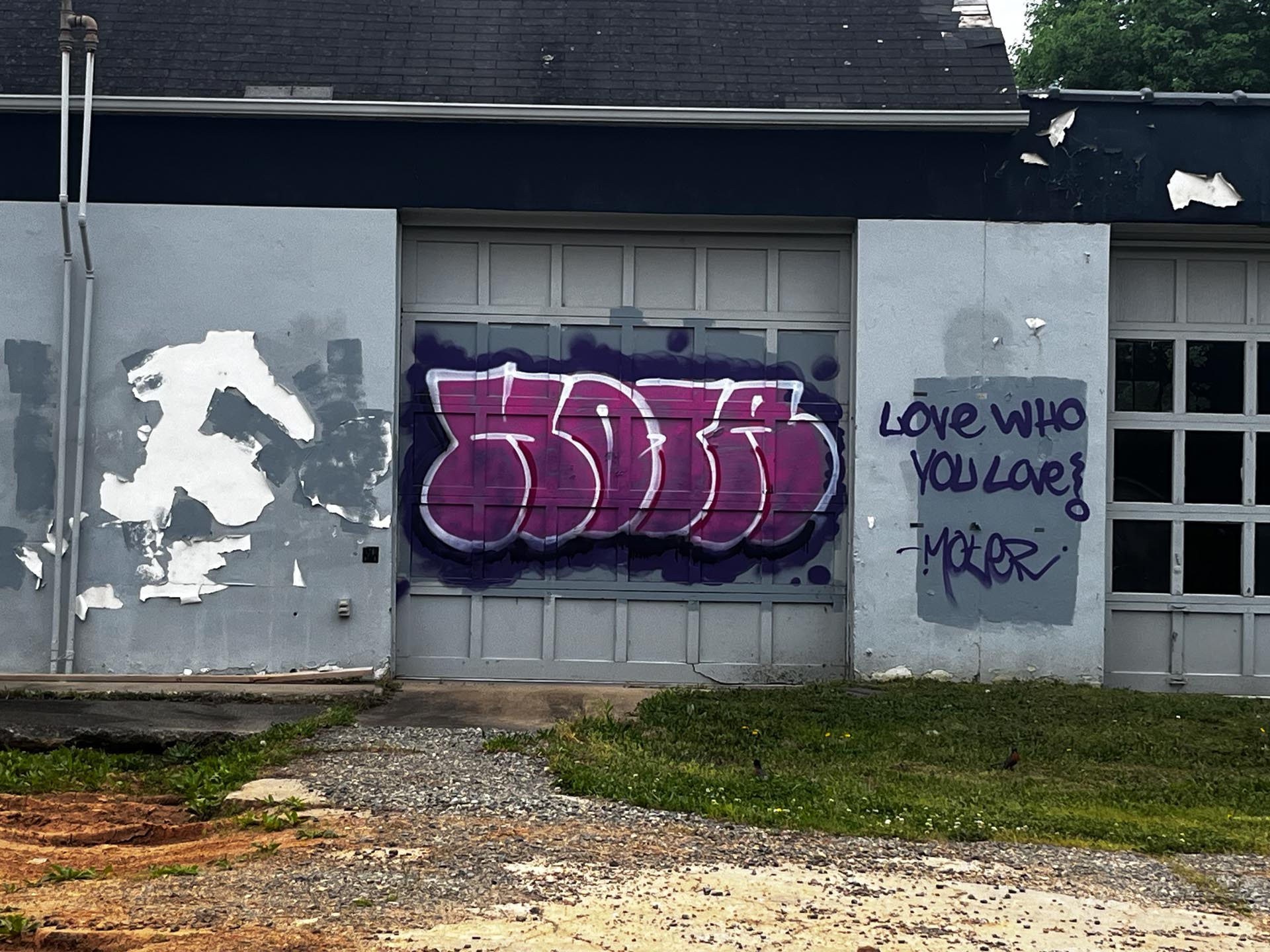
Tags Never Tell You Who To Love! Winston Salem
For others, awareness creates admiration. They begin noticing technique, placement, color transitions, risks taken, repetition, territorial patterns, and the personalities hidden within the lettering. They begin to recognize that certain names appear across entire regions like signatures drifting through the landscape. The city transforms into a living gallery hidden in plain sight.
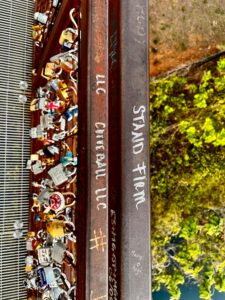
Love Locks! Rock Quarry Winston Salem
That shift fascinates me.
I often wonder where the line exists between art and vandalism. Why does someone like Banksy receive cultural admiration and protection while others are dismissed as criminals or nuisances? Some people see urban expression and rebellion. Others see damage, disorder, and expense.
The reality is complicated.
Business owners and local governments spend enormous amounts of money removing unwanted graffiti. Property owners repaint walls, hire removal crews, and fight an ongoing battle against markings they never asked for. At the same time, many of the artists possess undeniable talent. Creating gradients, depth, shadows, and movement with nothing more than aerosol paint and speed requires practice and vision.
I’ve never truly seen the underground side of graffiti culture firsthand. I have seen sanctioned public artists painting in Asheville with crowds gathered around them, cameras out, applauding the process. In SOHO I watched a couple of my friends stand bare in front of a crowd of artist and onlookers who captured their bodies through their own minds eye. But what about the artists who move through shadows? The ones climbing rail cars at night? The ones leaving names behind in places most people never notice? The ones who feel compelled to leave evidence that they existed, even if only in the corner of a bathroom stall or on the side of a forgotten train?
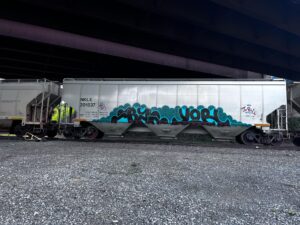
Forget Me Not! Railcar in Winston Salem
There seems to be no permanent middle ground between artistic expression and public approval. Graffiti lives in tension. It is rebellion and creativity. It is self-expression and trespassing. It can beautify a wall or destroy one, depending entirely on who is looking at it.
This page is dedicated to the artwork I encounter along the way.
The photographs I take become tags of their own. Once captured, the images take on a separate life inside the viewer’s mind. People can interpret them however they choose. The wall may eventually be painted over. The train may move on. The original artist may disappear back into anonymity.
But the tag lives on.
Is art life or death?
There is another aspect of graffiti and public art that I think about often now: the fragility of art itself.
People argue endlessly over what should be preserved and what should be painted over. Cities spend fortunes removing graffiti while galleries and collectors spend fortunes protecting other forms of expression. Yet in the end, time has a way of humbling both sides equally.
In the spring before Hurricane Helene devastated western North Carolina, I visited the River Arts District in Asheville and wandered through the studios inside the Marquee. During that visit, I purchased a $44 mystery bag from one of the artists. A friend who was with me asked if I planned to open it.
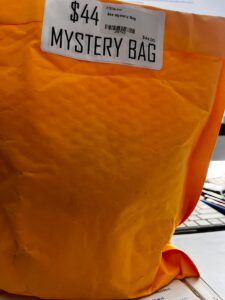 I told her I couldn’t.
Opening the bag would destroy the mystery.
The object itself was never the entire point. The sealed bag carried its own energy because it remained unresolved. Unknown. The moment the artwork is revealed, the imagination collapses into certainty. But as long as it stays hidden, it continues generating conversation. People ask questions. They speculate. They project meaning onto something they have never seen. In a strange way, the mystery amplifies the artwork far beyond the physical object itself.
I still have the receipt. With a few clicks, I could probably locate the artist and discover exactly what sits inside the bag. But doing so would remove the allure. Some things are more powerful when left partially unknown.
Ironically, the greatest mystery arrived only months later.
No one could have imagined that a hurricane would stall over the Appalachian Mountains and devastate Asheville the way Helene did in the fall of 2024. As the storm pushed inland and collided with the mountains, enormous amounts of rain were squeezed from the clouds. The water rushed through creeks and tributaries before converging into the French Broad River.
Entire sections of the River Arts District were destroyed. Buildings disappeared. Studios flooded. Artwork vanished. Businesses were ripped apart. People lost possessions, livelihoods, memories, and in some cases, their lives.
In reflection I ask myself what happened to the artist who created the mystery bag? That particular display had hundreds of items. This particular bag was on the highest shelf, furthest way for anyone to reach. Except me, I am 6'4" with exceptionally long arms. I intentionally grabbed the hardest bag to reach without concern for how much the bag costs. It is believed that the remaining artworks washed away like seashells on an ocean shore. So then, what is the value of my mystery bag now? And was it best that I kept my curiosity in check and left it unopened?
What struck me most afterward was how the storm erased distinctions people normally fight over.
The hurricane did not care which artwork was sanctioned and which was illegal.
Forget Me Not!
It washed away carefully curated galleries and buildings covered in unsanctioned graffiti alike. It carried paintings, spray cans, murals, merchandise, tags, sculptures, stickers, and debris together into the same muddy current. The worlds of street art and institutional art collided at the bottom of the river.
Some of it still rests there now—buried in silt, scattered downstream, or carried silently into another state.
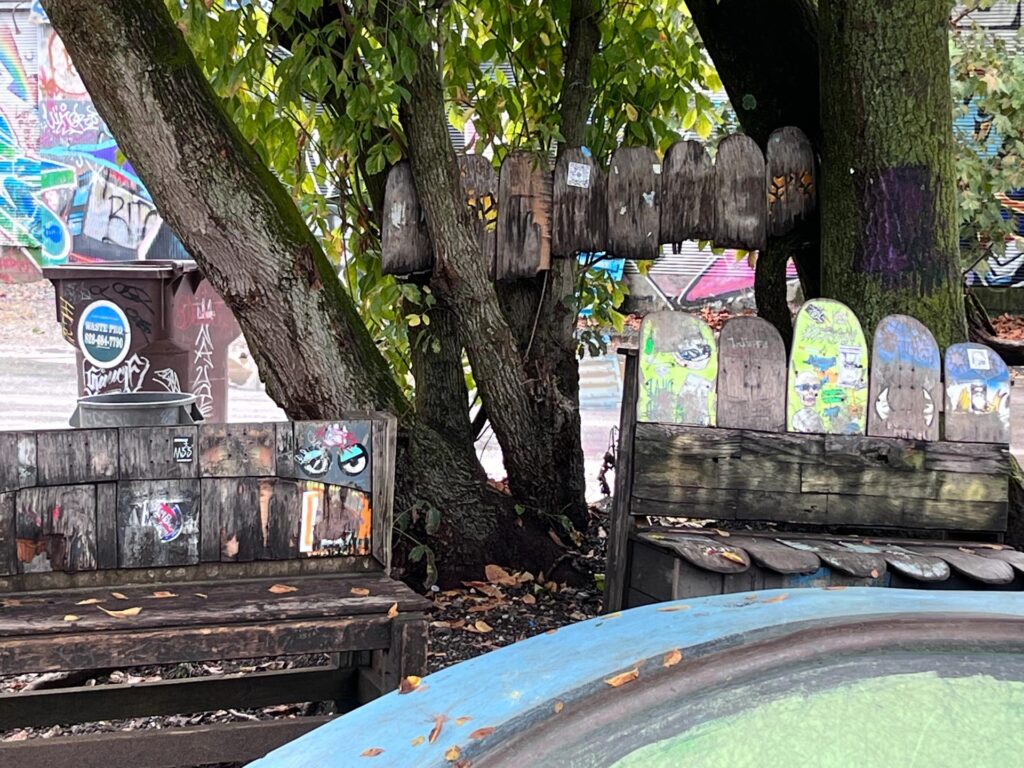
Death of a skateboarder!
That thought changed the way I view art.
We spend so much time debating legitimacy, ownership, value, permission, and permanence. But permanence is an illusion. A mural can disappear overnight. A train car gets repainted. A wall gets demolished. A gallery floods. An artist dies. A city changes. Eventually, nearly all art becomes temporary, like a leaf on the tree of life.
I am glad I kept that mystery bag sealed.
To me, it has become something larger than a purchase. It is a reminder that we are all living on the edge between what is known and unknown. Between preservation and disappearance. Between memory and loss.
In the end, we are all one storm away from the place where graffiti and fine art finally become the same thing.
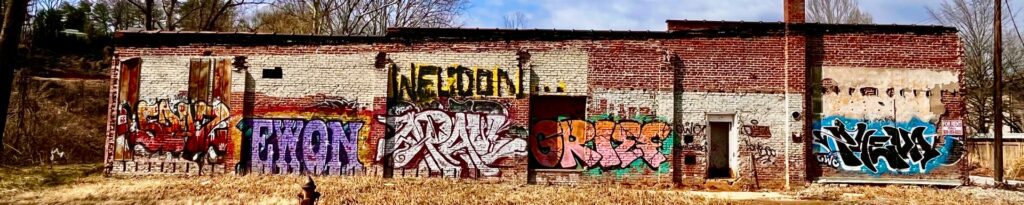
Asheville near the old Moes barbecue that we lost during Helene.

Leave A Comment
You must be logged in to post a comment.